Where Forests, River, and Community Connect
In the heart of the city, the forest and river are full of stories waiting to be explored. Join us on land or by water to connect with these landscapes and discover what they mean for our communities—from health and habitat to our connection with nature and each other.
Explore the Floodplain Forest at Crosby Farm Regional Park
Have you ever visited Crosby Farm Regional Park in St. Paul, Minnesota? Over half a million people come to this park each year to fish, run, walk their dogs, and play with their grandchildren. Each visitor seeks something from the deep, quiet woods along the Mississippi River valley, a connection to nature in the middle of the city. Down in the floodplain forest, the air is cleaner and fresher thanks to the vast number of trees. The health of the surrounding area is tied directly to the health of the forest, which is always changing, and lately the forest seems to be in trouble. The tree canopy isn’t regenerating like it used to; the small trees coming up are struggling to take the place of the ones we’ve lost to climate-change-related challenges, such as pests, disease, and flooding.
This loss of green space, especially in an urban setting like the Twin Cities, affects the surrounding neighborhoods. Trees purify air, provide shade, and even enrich garden soil. Without them, our communities are less healthy. As these cities get busier, summers get hotter, and food gets more expensive, the benefits that trees provide to those who live near them become even more important. This role of tree canopy in communities is part of why the struggling young trees at Crosby Farm caught the attention of researchers: they want to know what can be done to help the forest.
Any good plan starts with good data. Five years ago, newcomers arrived at Crosby: researchers brought southern species like Sweetgum, Tulip Poplar, and Pecan. They’ve been quietly growing in research plots here, far from their traditional homes, as part of a new project looking into the future of our forests. This summer, for the first time since their planting in 2020, the plots will be open for public tours. We want you to be part of the exploration! Your trees and green spaces are part of your community. Learning about them allows you to advocate for their health and the well-being of your neighborhood, helping you to solve some of the problems that come with living in an urban environment.
Want to get involved? Here’s how:
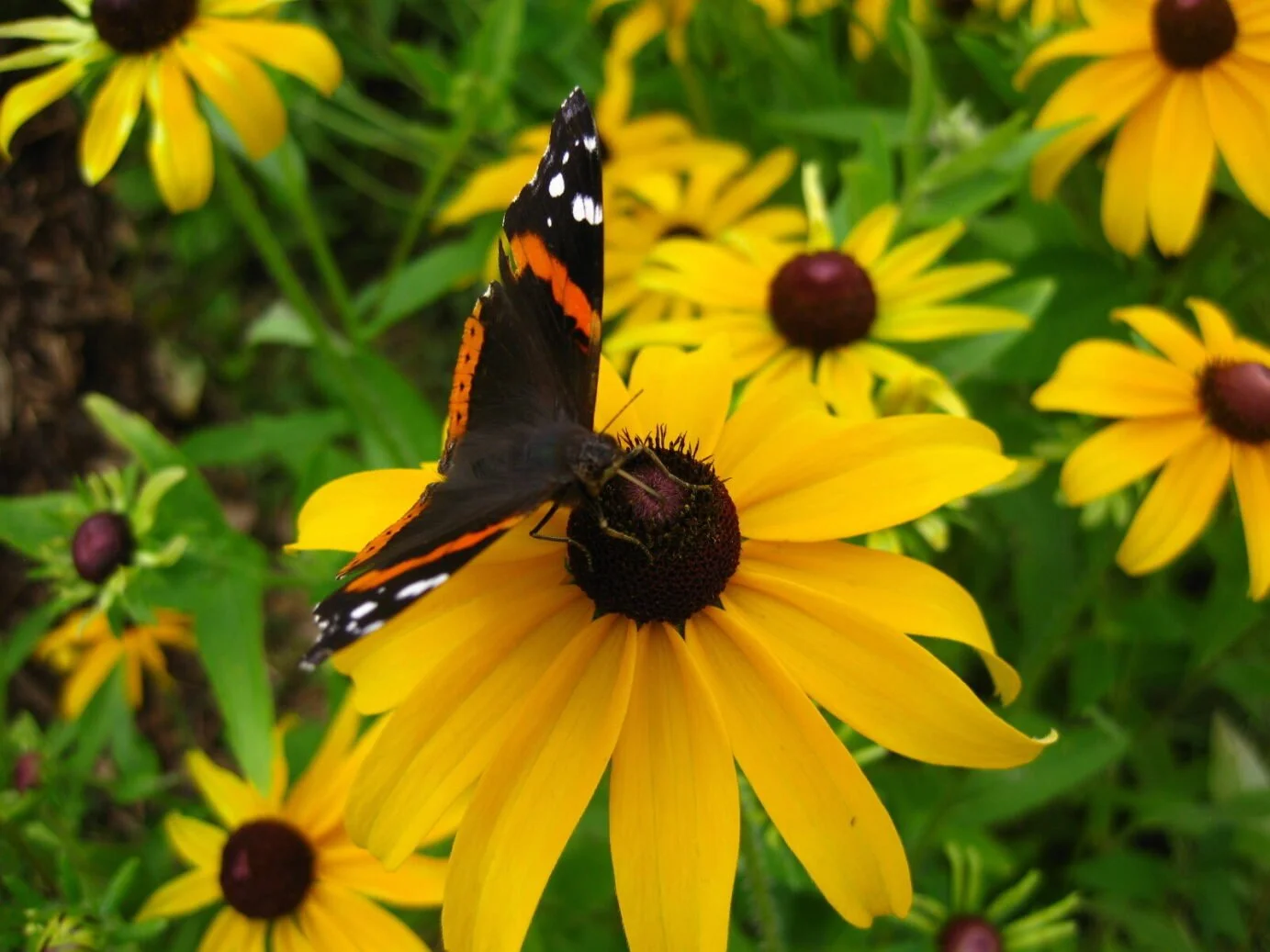
Share Your Ideas
Take our community survey to share what you want to learn about trees and natural spaces in your community.
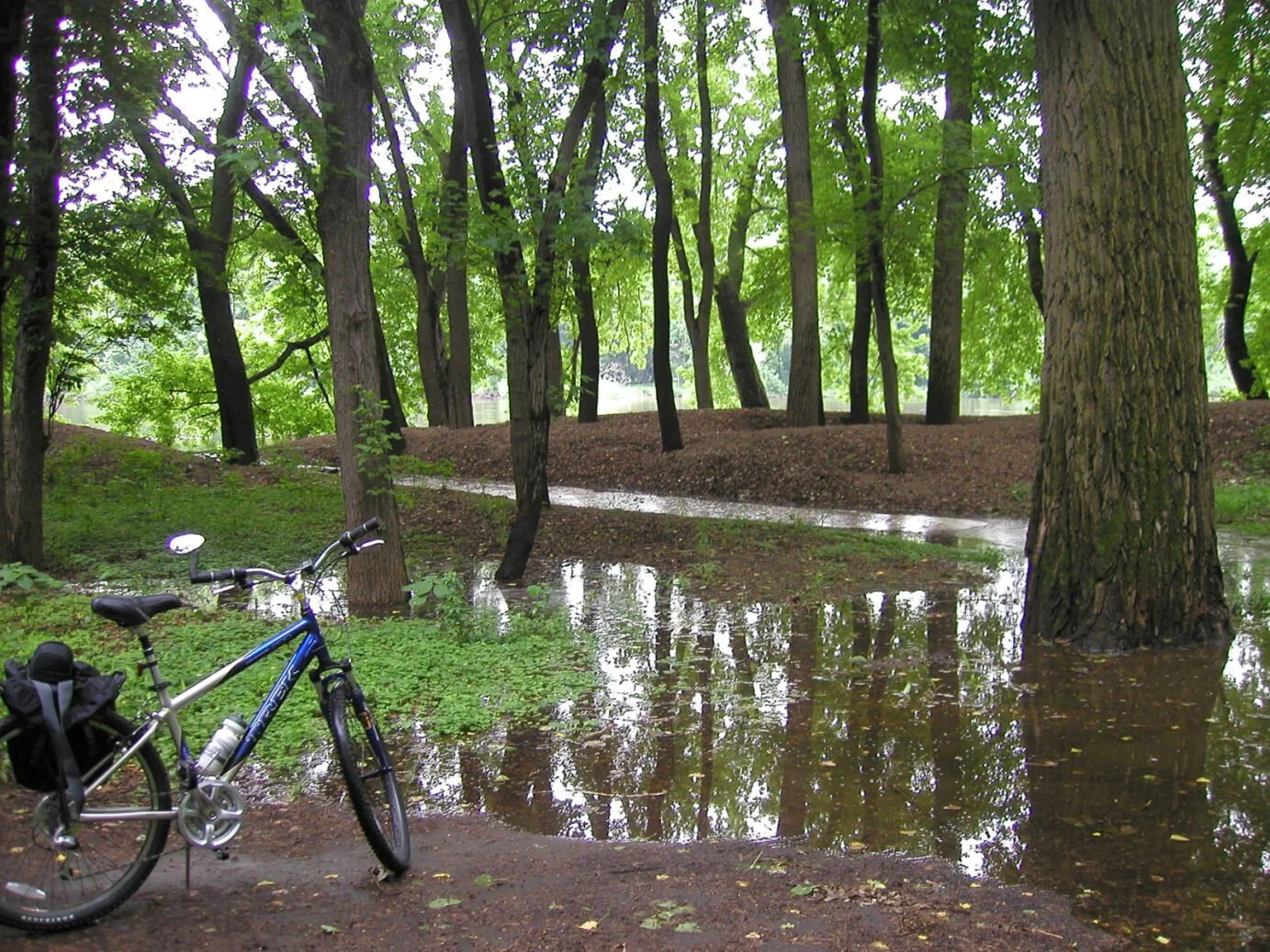
Take a Tour
Check back this summer to sign up for public tours of the ASCC plots at Crosby Farm Regional Park in St. Paul, MN.
This project is funded by a grant from MN Department of Natural Resources and USDA Forest Service. This institution is an equal opportunity provider.
“The Mississippi & Me” Tours
When spring settles in each year, do you drive or ride over the Mississippi and watch the new leaves wrap the river in a green blanket? Do you fish or paddle on the river, or avoid it altogether? Is the nature you see most often just a tree on your street or in your local park? No matter how close you live to the Mississippi River, the health of the river and our neighborhoods’ trees has the power to harm or support our own physical and mental health.
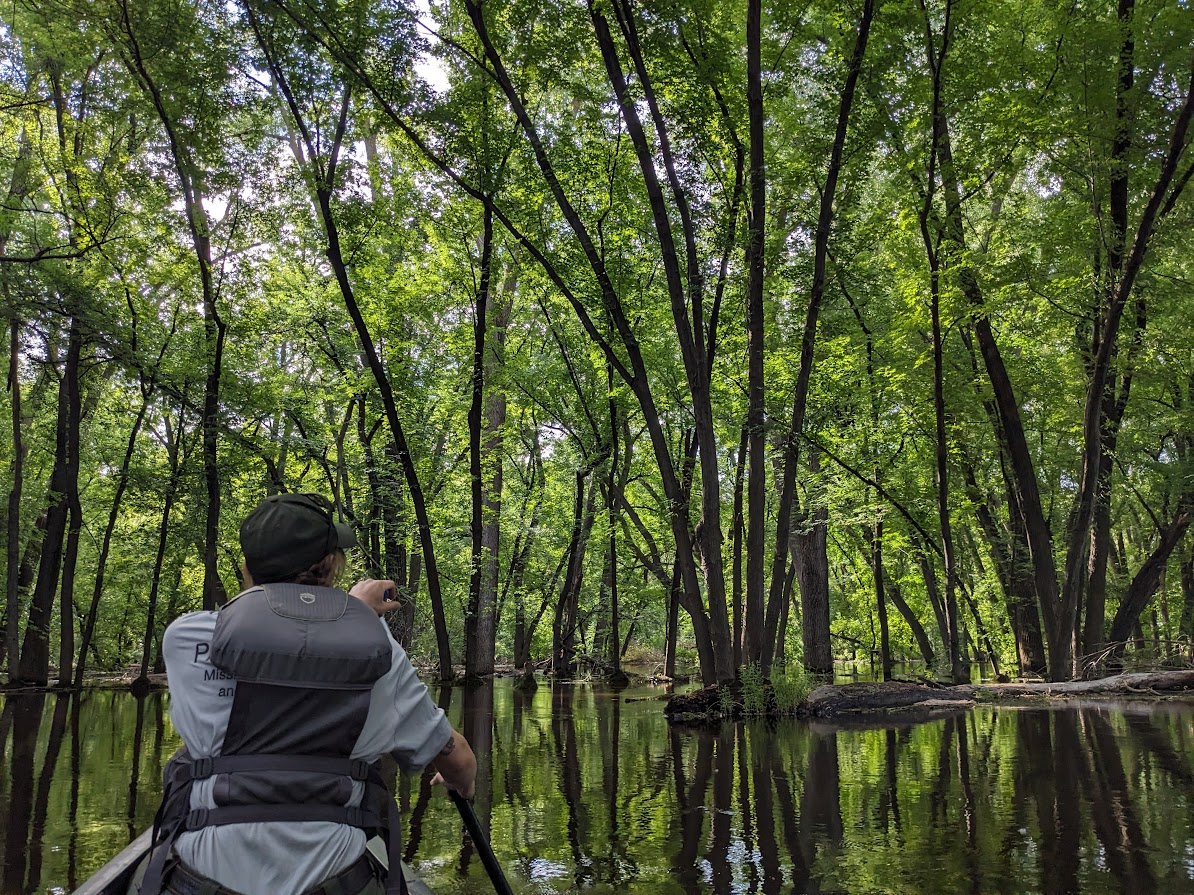
Come join Mississippi Park Connection this summer for BIPOC-led, justice-focused tours of our tree canopy and riverway! See our urban forest from a new point of view: join us on a riverboat cruise or get closer to the water in a kayak or canoe. Our team of BIPOC environmental justice and forestry educators will introduce you to the cornerstone species of our cities’ forests and share how local scientists and dedicated volunteers are helping our urban tree canopy adapt to climate change.
You'll learn about tree equity projects across the Twin Cities, make new connections, and discover how you can get involved with promoting the health of our communities and our river!
No paddling experience necessary for the Magnolia Blossom boat tour (also accessible for children and folks with limited mobility) or canoe trips led by Wilderness Inquiry. Paddling experience recommended for kayak tours.
Meet the Community Educators
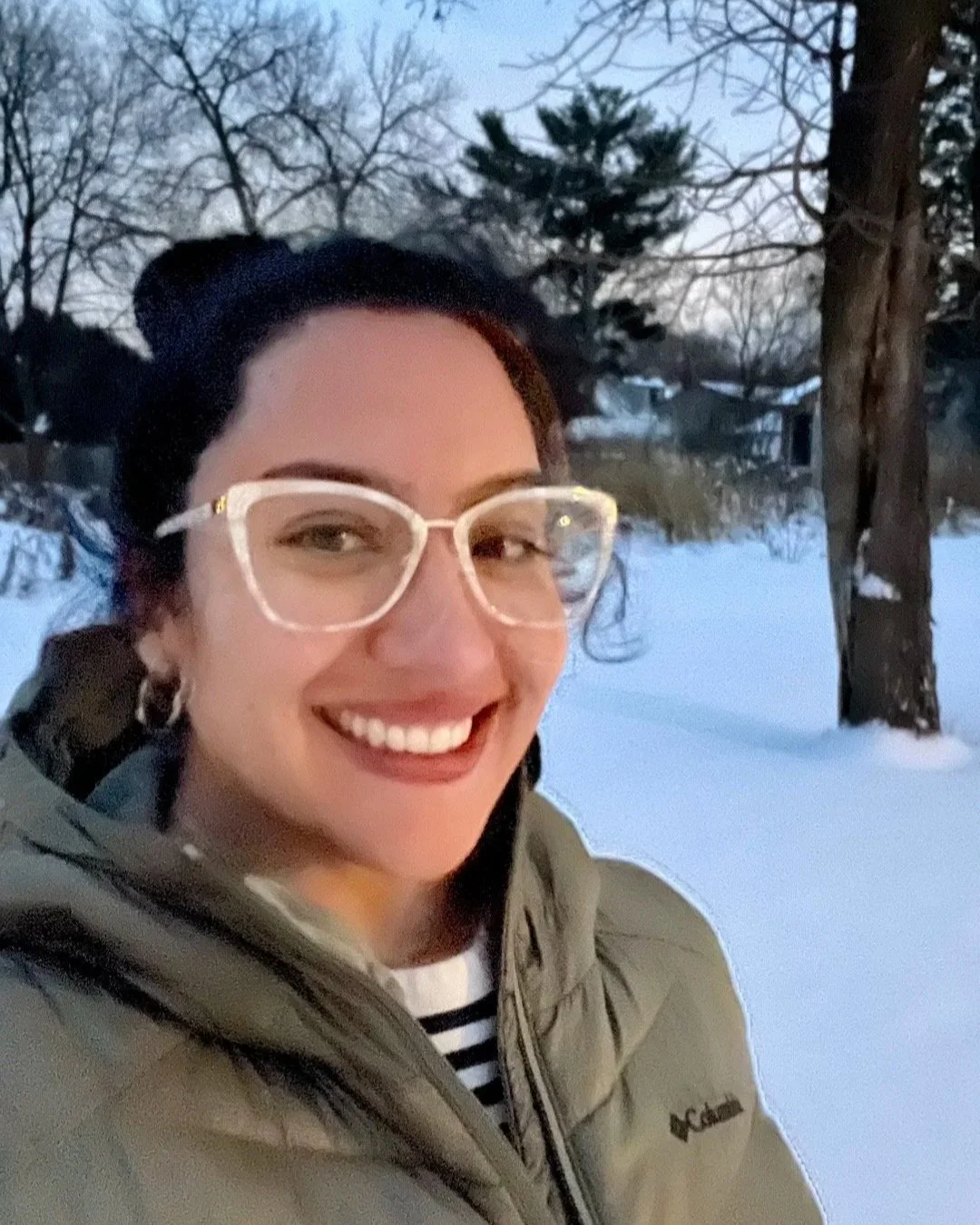
Vanessa Agudo
Vanessa Agudo is a Chicana environmental professional from California, a mother, and a community-centered educator focused on environmental justice, urban forestry, and equitable access to green spaces. Her work centers on place-based approaches that connect BIPOC communities to local land and water through hands-on learning and community programming. She is especially interested in food systems, cultural connection, and community empowerment as pathways to environmental engagement. As someone actively relearning and unlearning colonial ways of thinking, Vanessa finds grounding and guidance in nature, which continues to shape both her personal journey and her work.
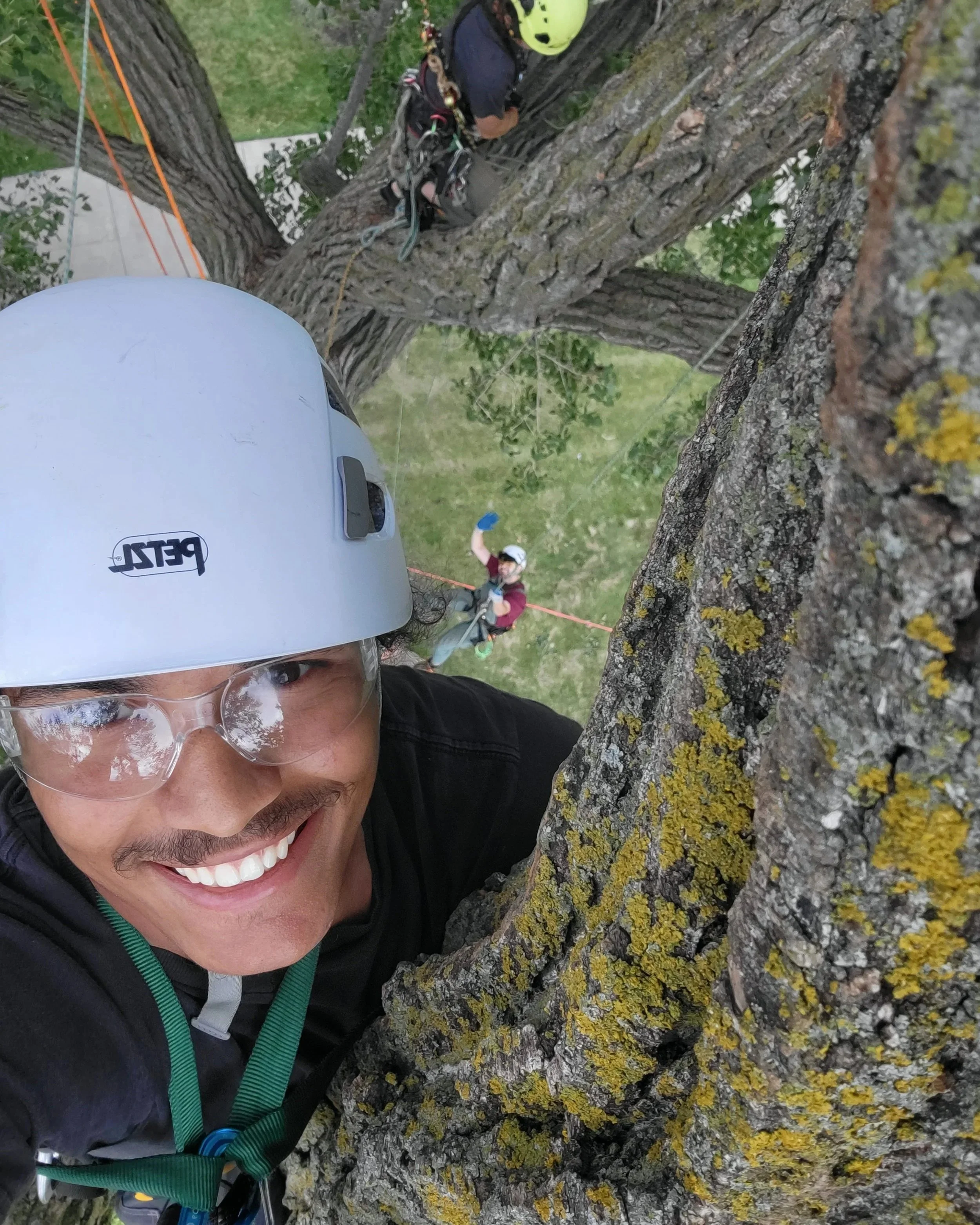
Derell Scott
Derell Scott is an ISA Certified Arborist and University of Minnesota graduate with a BS major in environmental science and two minors in forestry. He has worked as an arborist in both commercial and public industries, and is now working on his own venture which is both fulfilling and and exciting. Most recently, he started an LLC called “Just A Fungi” with the mission to work with nonprofits and government organizations, aiding their initiatives to connect people with nature and create green spaces for their community. When he’s not doing forestry work, he teaches martial arts—specifically Judo and BJJ, and you can also find him in the woods foraging for edible plants and practicing his plant ID skills.
Derell writes that “growing up in the western Twin Cities, I was raised by the urban forest and the fruits it gave me. From fishing in Medicine Lake to longboarding through the trails by Theodore Wirth and even foraging for morels in random small woods in between neighborhoods, there are many parts of the urban forest that I unknowingly cherished in small but meaningful ways while growing up, and my goal is to help people see the same beauty in the nature right outside of their door.”
Funding for this project was provided by the Minnesota Department of Natural Resources and the United States Department of Agriculture (USDA) Forest Service. This organization is an equal opportunity provider.
Questions?
Email programs@parkconnection.org with other questions and comments.
Connect
Joining our mailing list to learn about more opportunities to connect with your river and your national park on the Mississippi.